Guides · Running costs · 6 min read
What a heat pump really costs to run in a Tyneside semi
The honest arithmetic behind a yearly running cost, why flow temperature matters more than the brand, and what our customers' first-winter bills looked like.
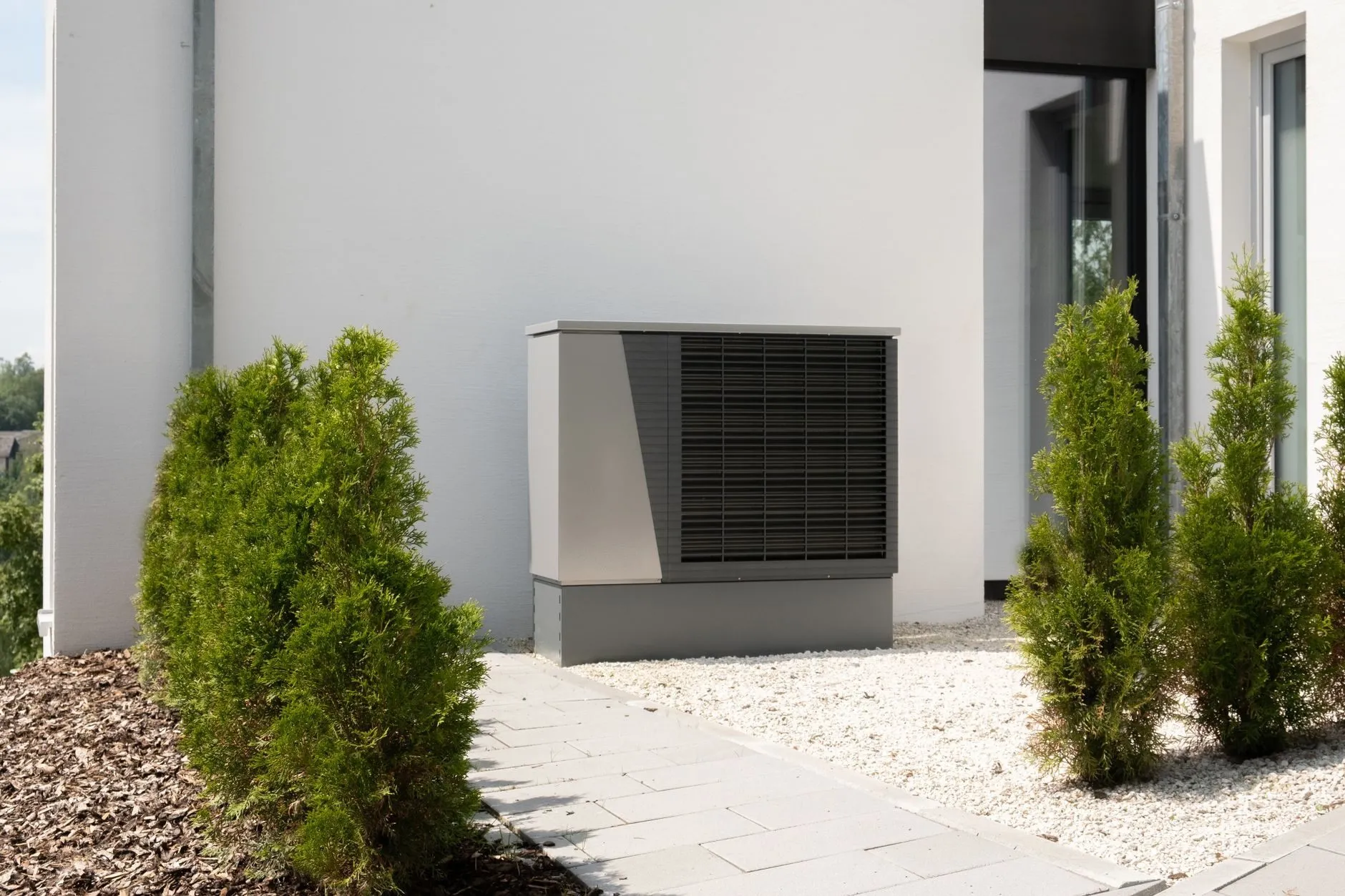
The question we hear most at surveys is the simplest one: will it cost more than gas? For most houses we survey, the answer is no, provided the system is designed and set up properly. Here is the arithmetic, so you can check it yourself.
Start with the heat, not the heat pump
A typical three-bedroom 1930s semi on Tyneside, with filled cavity walls and a reasonable loft, loses about 5.5 to 6 kW of heat on a cold January day. Across a year, that works out at roughly 11,000 to 12,500 kWh of heat for space heating. That number is the same whatever heats the house.
Then divide by efficiency
A gas boiler turns about 90% of the gas it burns into heat. At an illustrative 6.3p per kWh of gas, 12,000 kWh of heat costs about £840, plus a standing charge of around £115: roughly £950 a year.
A heat pump moves heat rather than making it. Across a whole season, a well-set-up one delivers about 3.4 units of heat for every unit of electricity in a house like this. At an illustrative 24.5p per kWh, that is about £860 a year.
Why flow temperature is the whole game
That 3.4 depends on how hot the water in your radiators is. At 45 °C a heat pump is comfortably efficient. Push it to 55 °C because the radiators are too small, and the efficiency drops by a fifth or more, and the saving disappears.
This is why our surveys go room by room. Upsizing two or three radiators costs a few hundred pounds each, once. Running too hot costs you every winter for twenty years.
What our customers actually saw
We ask everyone for their first-winter meter readings. Across last winter’s installs in three-bedroom houses, the median heating bill came in within 8% of our survey estimate, and more often under it than over.
Try your own house
Our estimator gives a running-cost comparison for your property type, size and insulation level. The survey then replaces the estimate with a figure worked out for your actual rooms.